
IIE-SRF fellows preserve the Venezuelan academy | Stanford University panel features IIE-SRF fellows | Join the Alliance | Snapshot of current IIE-SRF fellows and new appointments
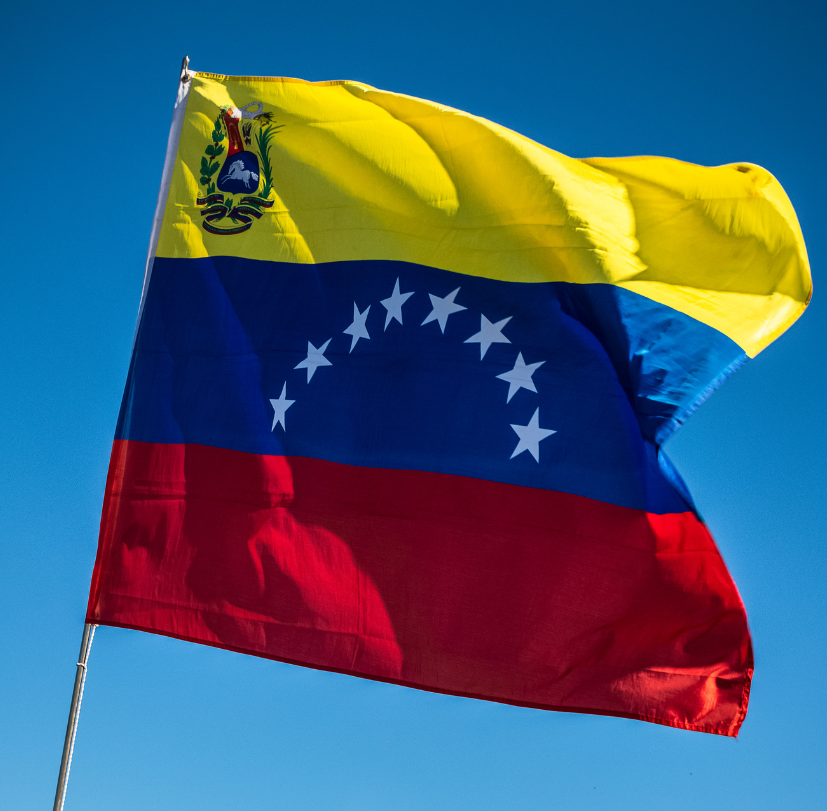
Venezuela’s entrenched political and economic crises are having a devastating impact on the country’s university students, professors, and higher education sector at large. Severe restrictions on universities’ autonomy, massive decreases in faculty salaries and research funding, and general insecurity have crippled scholars’ working conditions and left many higher education institutions on the brink of paralysis. Venezuela’s universities have experienced a rapid decline in the number of faculty on campus as well as total student body enrollment. Those who remain encounter deteriorating conditions on their once-vibrant campuses, where resource-deprived classrooms and laboratories stand largely abandoned.
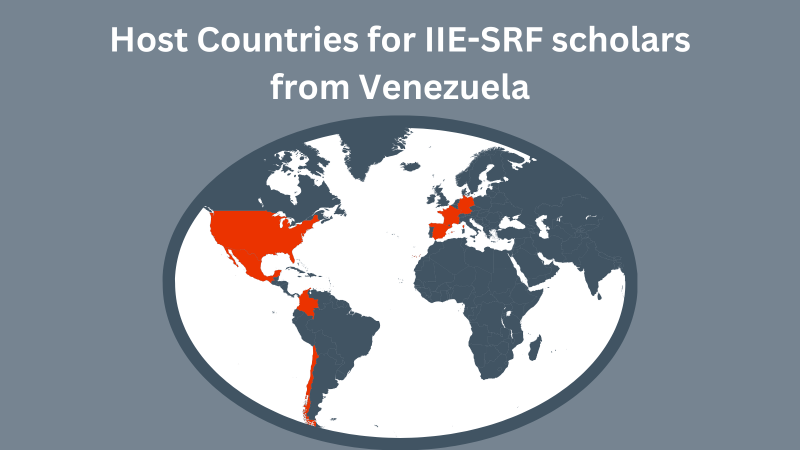
Throughout this crisis, IIE-SRF has awarded fellowships to 23 Venezuelan scholars who have undertaken appointments at host institutions across Latin America, Europe, and the United States. Many of these placements have allowed the scholars to continue their research and teaching activities in a Spanish-speaking environment.
Learn more about Venezuela’s higher education crisis in an IIE-SRF Dialogues webinar featuring representatives from the Latin American Studies Association and a fellow from Venezuela.
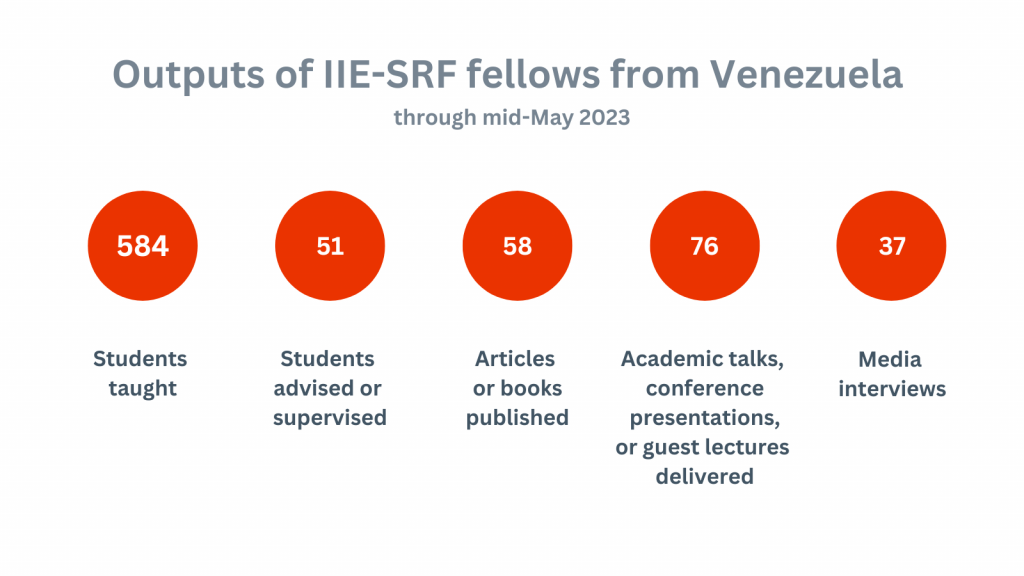
While at their host institutions, IIE-SRF fellows from Venezuela have shown a strong commitment to remaining engaged with the Venezuelan academy. More than 90% report that they have maintained connections with former colleagues and students in Venezuela throughout their fellowships, including by:
- Serving as thesis advisors or evaluators
- Publishing books or articles with former colleagues and students
- Publishing in Venezuelan academic journals
- Participating in ongoing research projects in Venezuela
- Offering online courses for students in Venezuela
- Offering online webinars, presentations, and chats
- Joining formal and informal networks of Venezuelan colleagues located both inside and outside of Venezuela
These fellows have made significant contributions to their host institutions and communities, scholarly fields, and Venezuelan students and colleagues, helping to safeguard the Venezuelan academy during this period of instability.
| Eulogio Chacón-Moreno Field: Ecology Host country: SpainDr. Chacón-Moreno was an IIE-SRF fellow from 2020-2022, hosted at the University of Lleida in Spain. He taught two courses at his host university – Global Change and Principles of Wildland Fire Science and Management – and published research on topics such as land-use and climate change impacts in the Venezuelan Andes, landscape dynamics of the Aeolian Savanna, and potential distribution of Andean crops in climate change scenarios. After his fellowship, he held a postdoctoral position at the University of Valladolid in Soria, Spain, where he conducted ecological research and delivered lectures on environmental issues.  |
| Dr. Chacón-Moreno now works at the Climate Research Foundation in Spain studying forest species distribution models in climate scenarios, biodiversity and ecosystems models of wetlands, and other strategies for climate change adaptation. He continues to contribute to solving academic challenges in his home country with the Institute of Environmental and Ecological Sciences, University of Los Andes and through his association with a branch of the Science Academy of Venezuela in Spain. |